

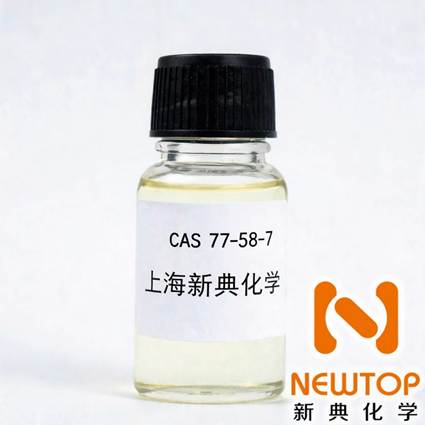
CAS 77-58-7 Dibutyltin dilaurate DABCO T-12 DBTDL Niax D-22 Kosmos 19
CAS 77-58-7 Dibutyltin dilaurate DABCO T-12 DBTDL Niax
D-22 Kosmos 19
CAS No.77-58-7
Chemical Name:Dibutyltin dilaurate
SynonymsDBTDL;dbtl;t12;tn12;davainex;tinostat;butynorate;DIBUTYLTIN
LAURATE;Dibutyltin dillaurate;DI-N-BUTYLDILAURYLTIN
CBNumber:CB7416378
Molecular Formula:C32H64O4Sn
Molecular Weight:631.56
MDL Number:MFCD00008963
Brand Designation / Product Code Table
|
Brand / Manufacturer |
Product Grade / Code |
Notes |
|
Dabco (Evonik / ex-Air Products) |
Dabco T-12 |
The global industry-standard benchmark for dibutyltin dilaurate. |
|
FASCAT (PMC Organometallics) |
FASCAT 4202 |
The standard organotin catalyst designation under PMC's FASCAT
line. |
|
Jeffcat (Huntsman) |
N/A (Not Applicable) |
Huntsman reserves the Jeffcat brand exclusively for
amine/organic catalysts. |
|
KAOLIZER (Kao Corporation) |
N/A (Not Applicable) |
KAOLIZER is Kao's brand line
specifically for amine catalysts. |
|
Lupragen (BASF) |
N/A (Not Applicable) |
BASF’s Lupragen portfolio consists strictly of amine-based
catalysts. |
|
Polycat (Evonik) |
N/A (Not Applicable) |
Polycat is used for Evonik’s specialty
tertiary amine catalysts. |
|
Tegoamin (Evonik) |
N/A (Not Applicable) |
Tegoamin is reserved for amine-based
foam catalysts. |
|
Toyocat (Tosoh) |
N/A (Not Applicable) |
Toyocat is Tosoh’s proprietary amine
catalyst brand line. |
|
U-CAT (San-Apro) |
N/A (Not Applicable) |
U-CAT is used primarily for amine,
imidazole, and specialty organic catalysts. |
Dibutyltin dilaurate
Properties
Melting point 22-24°C
Boiling point >204°C/12mm
Density 1.066 g/mL at 25
°C(lit.)
vapor pressure 0.2 mm Hg (
160 °C)
refractive index n20/D
1.471(lit.)
Flash point >230 °F
storage temp. Store below
+30°C.
solubility <1.43mg/l
form Oily Liquid
Specific Gravity 1.066
color Clear pale yellow
Water Solubility <0.1 g/100
mL at 20 ºC
FreezingPoint 8℃
Merck 14,3038
BRN 4156980
Exposure limits PC-TWA:0.1
mg/m3; PC-STEL:0.2 mg/m3
Stability Stability
Combustible. Incompatible with strong oxidizing agents. May be air sensitive.
InChI 1S/2C12H24O2.2C4H9.Sn/c2*1-2-3-4-5-6-7-8-9-10-11-12(13)14;2*1-3-4-2;/h2*2-11H2,1H3,(H,13,14);2*1,3-4H2,2H3;/q;;;;+2/p-2
InChIKey UKLDJPRMSDWDSL-UHFFFAOYSA-L
SMILES CCCCCCCCCCCC(=O)O[Sn](CCCC)(CCCC)OC(=O)CCCCCCCCCCC
LogP 3.120
UNSPSC Code 12352103
NACRES NA.22
SAFETY
Signal word Danger
Hazard statements H330-H301-H315-H319-H360-H370-H372-H317-H341-H410
Precautionary statements P501-P273-P272-P270-P202-P260-P201-P271-P264-P280-P284-P302+P352-P391-P337+P313-P305+P351+P338-P308+P311-P362+P364-P333+P313-P301+P310+P330-P304+P340+P310-P403+P233-P405
target organs thymus,
thymus,Immune system
PPE Eyeshields, Faceshields,
Gloves, type ABEK (EN14387) respirator filter
Hazard Codes T+,N,C,T
Risk Statements 22-26-36/38-50/53-68-48/25-43-34-61-60
Safety Statements 26-28-36/37-45-60-61-36/37/39-24-53
RIDADR UN 2922 8/PG 3
WGK Germany 3
RTECS WH7000000
F 10-21
Autoignition Temperature >200
°C
TSCA TSCA listed
HazardClass 6.1
PackingGroup III
HS Code 29319090
Storage Class 6.1C -
Combustible acute toxic Cat.3
toxic compounds or compounds which causing chronic effects
Hazard Classifications Aquatic
Acute 1
Aquatic Chronic 1
Eye Irrit. 2
Muta. 2
Repr. 1B
Skin Sens. 1
STOT RE 1
STOT SE 1
Hazardous Substances Data 77-58-7(Hazardous
Substances Data)
Toxicity LD50 orally in Rabbit:
175 mg/kg
REACH Registrations Active
Limited Quantities 5.0 L
(1.3 gallons) (liquid) or 5.0 kg (11 lbs) (solid)
Excepted Quantities Max Inner
Pack (30g or 30ml) and Max Outer Pack (1Kg or 1L)
Dibutyltin dilaurate
Chemical Properties,Uses,Production
Organic tin additive
Dibutyltin dilaurate is an organic tin additives, and can be soluble
in benzene, toluene, carbon tetrachloride, ethyl acetate, chloroform, acetone,
petroleum ether and other organic solvents and all industrial plasticizers, but
insoluble in water. Multipurpose high-boiling organic tin catalyst circulation
of dibutyltin dilaurate are usually specially treated liquefaction, and at room
temperature as a pale yellow or colorless oily liquid, when low temperature as
white crystals, and it can be used for PVC additives, it also has excellent
lubricity, transparency, weather resistance, and better resistance for sulfide
pollution. It can also uesd the stabilizer of the soft transparent products and
efficient lubricants in hard transparent products, and can also be used
acrylate rubber and rubber carboxyl crosslinking reaction, the catalyst of
synthesis of polyurethane foam and polyester synthetic, and RTV silicone
rubber.
The above information is edited by the chemicalbook of Wang
Xiaodong.
Chemical properties
It is pale yellow flammable liquid, and soluble in acetone and
benzene, can not dissolve in water.
Uses
It can be used as PVC heat stabilizers, and it is the earliest used
varieties in organotin stabilizers, heat resistance is less than tributyltin
maleate, but it has excellent lubricity, weather resistance and transparency
can be ok, and it has good compatibility with plasticizers, non-blooming,
non-sulfide pollution, no adverse effects on heat sealing and printability. For
it is liquid at room temperature, so the dispersion in plastic is better than
solid stabilizer.The product is mainly used in soft transparent products or
semi-soft products, generally in an amount of 1-2%. In hard products, the
product can be used as lubricant, and when used with maleic acid organic tin or
thiol-containing organic tin can improve the fluidity of the resin material.
Compared with other organic tin, the goods early color large will cause yellow
discoloration.The product can also be used as catalysts of synthesizing
polyurethane, the curing agents of silicone rubber. In order to enhance the
thermal stability, transparency, compatibility with resins, as well as improve
the impact strength for hard products and its other properties, now it has
developed a number of modified varieties. Lauric acid and other fatty acids is
generally added in the category of pure, the epoxy ester or other metal soap
stabilizer is also added in. The product is toxic materials. Rat oral is LD50
of 175mg/kg.
Production method
It is condensed by DBTO and lauric acid at 60℃. After condensation, vacuum
dehydration, cooling, pressure filtration derived products.
Category
Toxic Substances.
Toxicity grading
Highly toxic.
Acute toxicity
Oral-rat LD50: 175 mg/kg; oral-mouse LDL0: 710 mg/kg.
Stimulus data
Skin-rabbit 100 mg/24 hours moderate.
Flammability hazard characteristics
Combustible fire.
Storage Characteristics
Treasury should be ventilated and low-temperature drying; and should
transport separately with food materials.
Extinguishing agent
Carbon dioxide, sand, water, foam.
Occupational standards
TWA 0.1 mg (Sn)/cubic meter; STEL 0.2 mg (Sn)/cubic meter.
Chemical Properties
yellow liquid
Uses
PU catalyst, RTV silicone rubber
Uses
Stabilizer for polyvinyl chloride resins. Catalyst for curing
certain silicones.
Uses
Di-n-butyltin dilaurate is used as a catalyst for the production of
polyurethanes as well as for the transesterification reactions. It is involved
in the vulcanization of silicones and a stabilizer in polyvinyl chloride (PVC).
It acts as a rust inhibitor for polyurethanes, polyols, silicones and as a fuel
additive.
Uses
Dibutyltin dilaurate has been used as a catalyst in a protocol for
the covalent attachment of poly(ethylene glycol) (PEG) to silicon oxide to form
a hydrophilic non-fouling surface. It can also be used as a catalyst in the
preparation of polymers by reacting hydroxyl-terminated macromonomers and
aliphatic diisocyanates.
General Description
Clear yellow viscous liquid.
Air & Water Reactions
Dibutyltin dilaurate may be sensitive to air or heat. . Insoluble in
water.
Reactivity Profile
Dibutyltin dilaurate is strongly reactive with many other groups.
Incompatible with acids and bases. Organometallics are good reducing agents and
therefore incompatible with oxidizing agents.
Fire Hazard
Dibutyltin dilaurate is combustible.
Safety Profile
Poison by ingestion and intraperitoneal routes. A skin and eye
irritant. Avoid the vapor produced by heating. Combustible when exposed to heat
or flame; reacts with oxidizers. When heated to decomposition it emits acrid
smoke and fumes. See also TIN COMPOUNDS
Toxics Screening Level
The initial threshold screening level (ITSL) for dibutyl tin
dilaurate is 5 μg/m3 (8-hr averaging time).
Dibutyltin dilaurate
Preparation Products And Raw materials
Raw materials
Lauric acid Dibutyltin oxide TETRABUTYLTIN
Preparation Products
methyl block RTV silicone rubber adhesive QD-200 sersies polyurethae
finishes PUC series
Business and technology contact:
sales@newtopchem.com