

DBU 1,8-diazabicyclo [5.4.0] undec-7-ene CAS6674-22-2 Lupragen N700
DBU 1,8-diazabicyclo [5.4.0] undec-7-ene CAS6674-22-2
Lupragen N700
1,8-diazabicyclo [5.4.0] undec-7-ene (DBU)is a commonly used organic strong base and catalyst, with the molecular formula
C ₉ H ₁ N ₂ and CAS number
6674-22-2. It is a colorless or slightly yellow transparent liquid with a
strong pungent odor and easy absorption of carbon dioxide. It is widely used in
organic synthesis, resin curing, and pharmaceutical production.
Basic information and physicochemical
properties
Chemical identification:
Chinese name: 1,8-diazabicyclo [5.4.0]
undec-7-ene.
Foreign name: 1,8-Diazabicyclo [5.4.0]
undec-7-ene (DBU).
Molecular formula: C ₉ H ₁ N ₂, molecular weight: 152.24.
CAS login number: 6674-22-2.
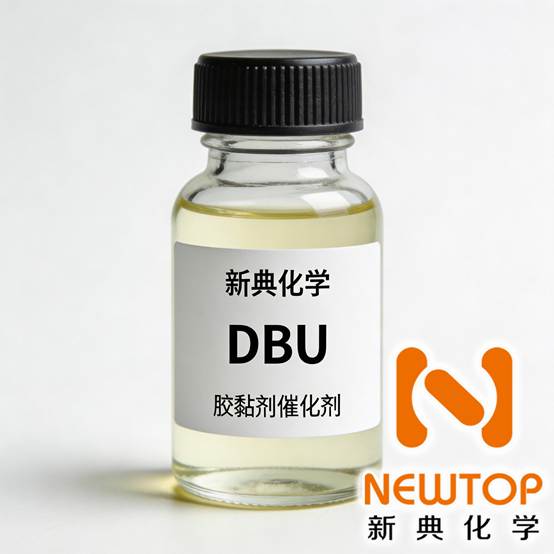
Physical parameters:
Appearance: Colorless or light yellow
transparent liquid, odorless or with unpleasant odor.
Density: Approximately 1.018 g/mL (25 ° C).
Boiling point: 80-83 ° C (under reduced pressure of 0.6 mmHg), with a higher boiling point
at atmospheric pressure.
Flash point: 116 °
C, classified as flammable liquid.
Solubility: soluble in most organic
solvents such as water, ethanol, acetone, etc., but difficult to dissolve in
petroleum ether.
PH value: The pH of a 1% aqueous solution
can reach 12.8, making it a highly alkaline substance.
Main uses and application areas
Organic synthesis catalyst:
As a non nucleophilic strong base, it is
used for reactions such as dehalogenation, desulfurization, and
denitrification.
Promote esterification, etherification,
amidation, Baylis Hillman reaction, and Knoevenagel condensation reaction.
The latest review in 2025 shows that DBU
plays an important catalytic role in the synthesis of heterocyclic compounds
such as spiro rings and fused rings.
Industrial and Material Applications:
Used as an epoxy resin hardener and resin
curing accelerator, especially suitable for integrated circuit packaging.
Used for polyurethane production, cellulose
dissolution and activation.
In 2026, research indicated that DBU can be
used to synthesize novel zinc based organic-inorganic hybrid materials with
potential for optoelectronic and magnetic applications.
|
Manufacturer / Brand |
Product No. |
Purity / Grade |
Remarks |
|
Sigma‑Aldrich (Merck) |
139009 |
≥98% |
Aldrich lab grade |
|
Sigma‑Aldrich (Merck) |
33482 |
≥99.0% (GC, puriss.) |
High purity grade |
|
Sigma‑Aldrich (Merck) |
8.03282 |
for synthesis |
Merck older synthesis grade |
|
Alfa Aesar (Thermo Fisher) |
A12449 |
98+% |
Research grade |
|
TCI (Tokyo Chemical Industry) |
D1270 |
≥98.0% |
Standard lab reagent |
|
BASF |
Lupragen® N700 |
Industrial catalyst grade |
Polyurethane catalyst, bulk industrial
grade, not lab reagent |
Pharmaceutical production:
Widely used in the production of
cephalosporin semi synthetic antibiotics.
Participate in the synthesis of complex
natural products such as dauricin and camptothecin.
Safe operation and storage
Hazard risk:
Corrosive and can cause skin burns and
severe eye damage.
Acute toxicity: The oral LD50 in mice is
approximately 660-1066 mg/kg.
Harmful to aquatic organisms and may cause
long-lasting effects.
Protective measures:
Wear a face mask, protective gloves,
goggles, and protective clothing during operation.
Avoid inhaling dust or gas, thoroughly
clean the skin after operation.
Storage and transportation:
Easy to absorb carbon dioxide, it is
recommended to store it sealed with argon gas.
Store in a cool, low-temperature place,
away from heat sources, sparks, and open flames, and use corrosion-resistant
containers.
Transport category: flammable liquid, UN
number 2922.
Business and technology
contact: sales@newtopchem.com