

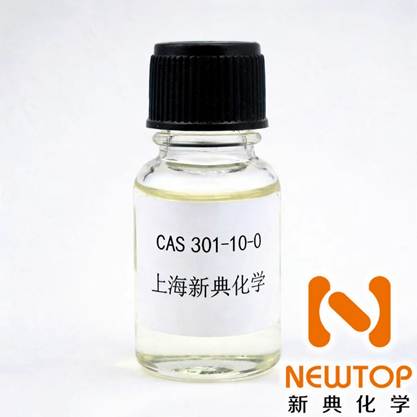
CAS 301-10-0 Stannous octoate DABCO T-9 TIB KAT 129
CAS No.301-10-0
Chemical Name: Stannous octoate
SynonymsTIN(II) 2-ETHYLHEXANOATE;TIN
OCTOATE ;Stannous octanoate; STANNOUS 2-ETHYLHEXANOATE;tin
bis(2-ethylhexanoate);TIB KAT 129; Tin dioctoate; Stannous Octoate T-9;Tin(Ⅱ)
2-ethylhexanoate;BIS(2-ETHYLHEXANOATE)TIN
CBNumber:CB0308694
Molecular Formula:C16H30O4Sn
Molecular Weight:405.12
MDL Number:MFCD00002676
Brand Designation / Product Code Table
|
Brand / Manufacturer |
Product Grade / Code |
Notes |
|
Dabco
(Evonik / ex-Air Products) |
Dabco T-9 |
The benchmark stannous octoate catalyst
in the polyurethane industry. |
|
FASCAT
(PMC Organometallics) |
FASCAT 2001 (or FASCAT 4201) |
Standard stannous octoate grade for
polyurethane and esterification applications. |
|
Jeffcat
(Huntsman) |
N/A (Not Applicable) |
Huntsman's Jeffcat brand is
designated exclusively for amine/organic catalysts. |
|
KAOLIZER
(Kao Corporation) |
N/A (Not Applicable) |
KAOLIZER
is Kao's brand line specifically for amine catalysts. |
|
Lupragen
(BASF) |
N/A (Not Applicable) |
BASF’s Lupragen portfolio consists
entirely of amine-based catalysts. |
|
Polycat
(Evonik) |
N/A (Not Applicable) |
Polycat is
used for Evonik’s specialty tertiary amine catalysts. |
|
Tegoamin
(Evonik) |
N/A (Not Applicable) |
Tegoamin
is reserved for amine-based foam catalysts. |
|
Toyocat
(Tosoh) |
N/A (Not Applicable) |
Toyocat is
Tosoh’s proprietary amine catalyst brand line. |
|
U-CAT
(San-Apro) |
N/A (Not Applicable) |
U-CAT is
used primarily for amine, imidazole, and specialty organic catalysts. |
Stannous octoate Properties
Melting point <-20°C
Boiling point >200°C
Density 1.251
g/mL at 25 °C(lit.)
vapor pressure 0.3Pa at 20℃
refractive index n20/D 1.493(lit.)
Flash point >110°C
pka 5.09[at
20 ℃]
form liquid
Specific Gravity 1.251
Viscosity 306mm2/s
Water Solubility Miscible with water.
Hydrolytic Sensitivity 7: reacts slowly with moisture/water
Exposure limits ACGIH: TWA 0.1 mg/m3; STEL 0.2 mg/m3 (Skin)
NIOSH: IDLH 25 mg/m3; TWA 0.1 mg/m3
InChI 1S/2C8H16O2.Sn/c2*1-3-5-6-7(4-2)8(9)10;/h2*7H,3-6H2,1-2H3,(H,9,10);/q;;+2/p-2
InChIKey KSBAEPSJVUENNK-UHFFFAOYSA-L
SMILES CCCCC(CC)C(=O)O[SnH2]OC(=O)C(CC)CCCC
LogP 2.64
at 25℃
UNSPSC Code 12161600
NACRES NA.22
SAFETY
Signal word Danger
Hazard statements H303-H316-H318-H361-H317-H411
Precautionary statements P501-P273-P272-P202-P261-P201-P280-P302+P352-P312-P391-P362+P364-P333+P313-P305+P351+P338+P310-P405
PPE Eyeshields,
Gloves, type ABEK (EN14387) respirator filter
Hazard Codes Xi,Xn
Risk Statements 36/37/38-62-52/53-43-41-63
Safety Statements 26-36/37/39-61
WGK Germany 1
RTECS MO7870000
TSCA TSCA
listed
PackingGroup III
HS Code 29159000
Storage Class 6.1C - Combustible acute toxic Cat.3
toxic compounds or compounds which causing
chronic effects
Hazard Classifications Aquatic Chronic 3
Eye Dam. 1
Repr. 1B
Skin Sens. 1
REACH Registrations Active
Stannous octoate Chemical Properties,Uses,Production
Chemical Properties
White or light yellowish brown paste.
Soluble in petroleum ether, insoluble in water. low toxicity of Stannous
octoate, oral acute poisoning data of rats LD50=3400mg/kg. acute percutaneous
poisoning data of rabbits LD50>2000mg/kg.
Uses
Stannous octoate is susceptible to
hydrolysis and oxidation and cannot be used in combination polyethers
(premixes). Its catalytic activity is higher than that of dibutyltin dilaurate.
Stannous octoate can be used as a catalyst
for polyurethane, mainly in the production of soft block polyether type
polyurethane foam, but also as a catalyst for polyurethane coatings,
elastomers, room temperature curing silicone rubber, etc. As it is a divalent
tin compound, it may be oxidized to tetravalent tin compound itself after
foaming, and it remains in the foam body to play the role of an antioxidant,
which stays in the foam after foaming and has no adverse effect on the foam
performance.
Uses
Tin(II) 2-ethylhexanoate is used as a
polymerization initiator in polylactic acid production. It acts as an
intermediate as well as a catalyst for urethane foams, lubricants, addition
agents and stabilizers for transformer oils.
Uses
A catalyst for polylactide polymerization.
Preparation
Stannous octoate is produced by reacting
2-ethylhexanoic acid with sodium hydroxide to form sodium 2-ethylhexanoate,
which then undergoes a complex decomposition reaction with stannous chloride by
heating in an inert solvent.
Hazard
Toxic material.
Flammability and Explosibility
Non flammable
reaction suitability
core: tin
reagent type: catalyst
reaction type: Ring-Opening Polymerization
Toxicology
Stannous octoate has influence to human
health. It may cause an allergic skin reaction, and serious eye damage. In
addition, it is suspected of damaging fertility or the unborn child, and
harmful to aquatic life with long lasting effects.
Stannous octoate Preparation Products And Raw materials
Raw materials
Tin 2-Ethylhexanoic acid Stannous chloride
Sodium hydroxide
Preparation Products
demulsifier SAP series main chain liquid
crystalling polysiloxane polyurethane hydrophilic silicone finishing agent
Business and technology
contact: sales@newtopchem.com
上一篇:CAS 108-01-02-Dimethylaminoethanol Dabco DMEA Jeffcat DMEA
下一篇:CAS 1185-81-5 DABCO T-120 UL 32 DI-N-BUTYLBIS(DODECYLTHIO)TIN